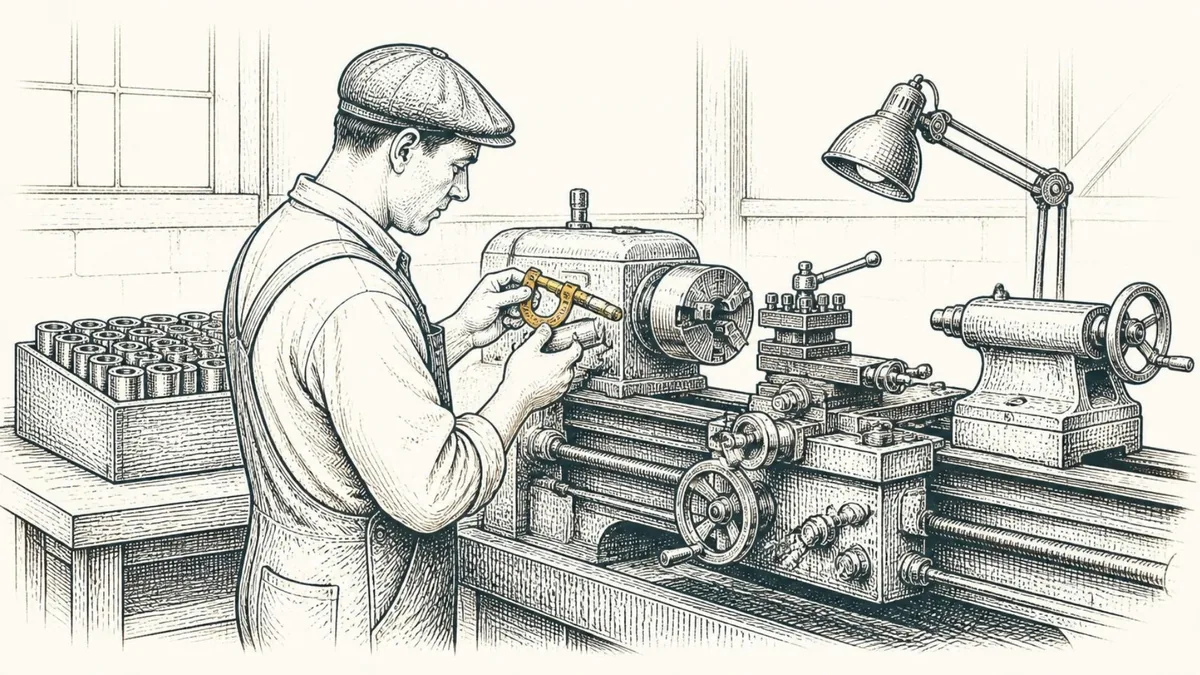
In machining there's a word for it: drift. A tool that cut perfectly on Monday is a fraction of a millimeter off by Thursday. Nothing breaks. No alarm goes off. The parts just get slightly worse until one day they don't fit, and by then you've made a few thousand of them.
If you're not looking for the drift, you won't see it till it's messed up your tool.
Good machinists don't wait for the part that doesn't fit. They measure on a schedule, because they know drift is silent. A micrometer on the bench, a sample pulled every so many parts, the reading written down. Dull work. It's also the reason the shop doesn't scrap a week of production.
Most product failure is drift.
The loud signals are late
We're trained to listen for the loud signals. The angry ticket. The churned logo. The NPS comment in all caps. Those matter, but they're late. By the time a customer tells you the product is bad, they decided weeks ago, and they've been quietly behaving like it ever since.
Think about what a complaint costs the customer. They have to notice the problem, care enough to say something, find the place to say it, and believe someone will listen. Most people stop at step two. They don't write in. They use you a little less, then a little less than that, and then they're in a renewal meeting telling procurement they've been "evaluating options."
From inside the company the cancellation looks sudden. From the customer's side it was a slow decision, made over months, that nobody asked about.
Behavior moves first
The early signal is behavior. Words come later. Customers who used to log in daily now log in on Mondays. A feature that drove expansion is now used mostly by your oldest accounts. Support tickets get shorter, because people have stopped explaining and started working around you. None of that shows up as a complaint.
I think about it the way I think about my kids. They almost never announce that something's wrong. But if you're paying attention, you notice they've stopped talking about a friend, or they're eating less at dinner, or they go quiet at a certain time of day. You don't wait for the speech. You notice the shift and you ask.
Products work the same way. The shift comes first. The speech, if it comes at all, comes last.
Not every shift is your fault
Here's the part that's easy to miss. A shift in behavior isn't always a response to you failing, or to you changing something.
Sometimes the standard moved. A process that's worked for years can change because people's expectations changed around it. You expect your kids to grow up and change; that's the point. Customers grow and change too. A new way to get the same thing shows up somewhere else, and the old way compresses. It rarely disappears. It gets smaller, and the people who still use it want something a little different from it.
So when you spot the shift, don't start with blame. Start with a question: did we change, or did the world around the customer change? Both are drift. They call for different fixes.
Three places to look
Three places I look for product drift:
- Frequency, not volume. Total usage can hold steady while the shape changes underneath it. One power user doing twice as much can hide three people who've stopped coming. Watch how often each account comes back, not just how much they do.
- Who's using what. If a feature's usage is ageing (older cohorts only), it's stopped earning new adoption. New customers are looking at it and deciding it isn't for them. That's the start of a slow death, and a dashboard showing steady total usage won't tell you.
- Workarounds. Exports, copy-paste, a spreadsheet on the side. Every workaround is a customer telling you, without saying it, what you got wrong. A rise in exports can be the most honest feedback you get all quarter.
None of these needs a new analytics platform. They need someone to look on a schedule, and to write down what they saw last time so this time has something to compare against. That's the micrometer on the bench.
Meetings drift first
Products aren't the only thing that drifts. Companies do too, and the easiest place to see drift in an organization is in the meetings.
When I come into an organization, one of the first things I look at is what's on the books. What standing meetings are there? How much time do people spend in meetings? What are they called: discussions, working sessions? What exactly is the intent of each one? The answers are often the first sign of a problem.
As an organization, a product or an intent drifts, you see more and more conversations about what's happening, and less and less action. Less understanding, too. The calendar fills with meetings that carry no value, and nobody remembers deciding to hold them.
I've never seen a company that experiences great continuous growth that is not investing in understanding what is happening and being able to take action on that. That includes protecting time for people to actually do the work. Meetings, and the quality of meetings, are often one of the first readings on the micrometer.
It's the same reason I end all my own recurring meetings once a year. ("Everything on the driveway" and "The yearly dry dock" tell that part.)
Everybody drifts
If you're running a company the way you did in 2020 and expect to be here in 2030, you're going to drift. Everybody does. Customers change, the tools around them change, the jobs they bring your product in to do change. The cutting edge wears whether or not you look at it.
The only question is whether you're measuring.
Nothing breaks. The parts just stop fitting.
Where the metaphor breaks
A machinist knows what the part is supposed to measure. Say the drawing calls for 25.00 millimeters: anything off that is drift. Products don't come with a drawing, and the target moves while you're cutting. Customer drift and your own drift look the same in the data. Both deserve the question.
And a machine never drifts on purpose. Customers sometimes do. An account logging in less might have finally automated the thing you help with, which is a win for them and a pricing question for you. Measure first. Then ask, before you decide what it means.
Try this
- Pick your ten most important accounts. For each, compare how often they came back each week this quarter with the same weeks a year ago. Frequency, not total activity.
- Take your three most important features and check who used them last month: new accounts, old accounts, or both.
- Ask support and customer success for every workaround they've heard about in the last 90 days. Exports, spreadsheets, side tools.
- Pull the list of standing meetings for your team. Write down what each is called and what it's for. Flag the ones that are all conversation and no action.
- Put it on the calendar. Same checks, same day, every month. Drift only shows up against last time's reading.
Where do you land?