Approach
The harbor pilot.
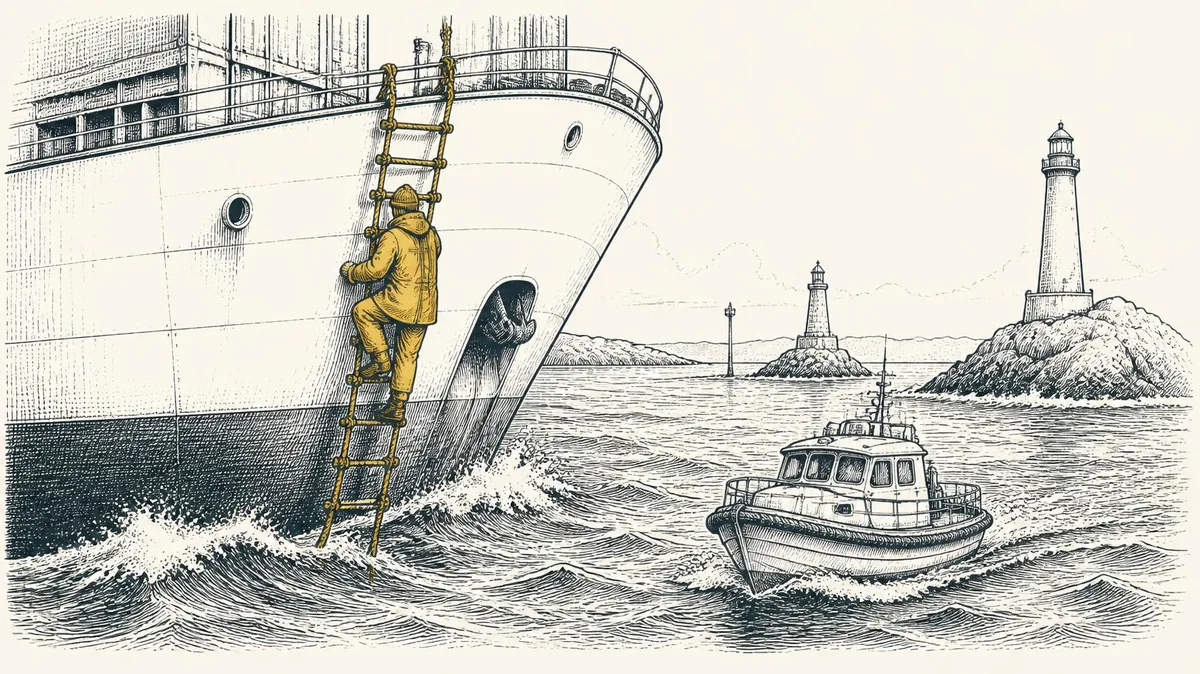
A harbor pilot boards a ship for the hardest stretch of water, brings it through and steps off. The captain keeps the ship. The pilot's value is having seen water like this before.
I've sat in both rooms.
I've worked with seed-stage teams and inside apps three billion people use. The patterns rhyme more than you'd expect, and the mistakes are often the same ones at a different size.
Eighteen years across payments, platforms, a credit union, federal work and seed-stage teams. Most roles came with one big job, like carrying a credit union through thirteen mergers.
How an engagement runs
Board, steer, hand off
Board
Read the water
Weeks one to four. Sit with the team, the numbers and the customers. Write down what is actually happening, whatever the deck says.
Steer
Take the hardest stretch
Pick the two or three moves that matter. Set the cadence, make the calls nobody else is placed to make, and show the board what changed.
Hand off
Step off a running ship
Leave a team, a roadmap and a rhythm that work without me. The captain keeps the ship.
What I believe
Four working rules
Explain it with something they already know.
If the team can't repeat the idea at dinner, it won't survive Monday.
Find the person with the problem.
They are the only audience that matters. Write for them and ignore the crowd.
Show the proof, and where it breaks.
Every metaphor has a limit. Saying so is what makes the rest believable.
Leave it running.
I judge my work by the weeks after I've stepped off.
Where the metaphor breaks
Sometimes the pilot should become the captain.
Not every company needs someone to step off. When the fit is right, the best outcome is a permanent seat. That's why one way of working together leaves room for it, if it works for both sides.
Fractional to full-timeHave a hard stretch of water coming up?
Tell me what's ahead and what's worrying you. I'll tell you how I'd approach it.