Anyone who has renovated a house with a family living in it learns the rule fast. You don't gut the kitchen and the bathroom in the same month. Somebody has to make dinner. Somebody has to shower before school. The contractor would happily take the whole place down to the studs at once (it's faster for them), but you live there.
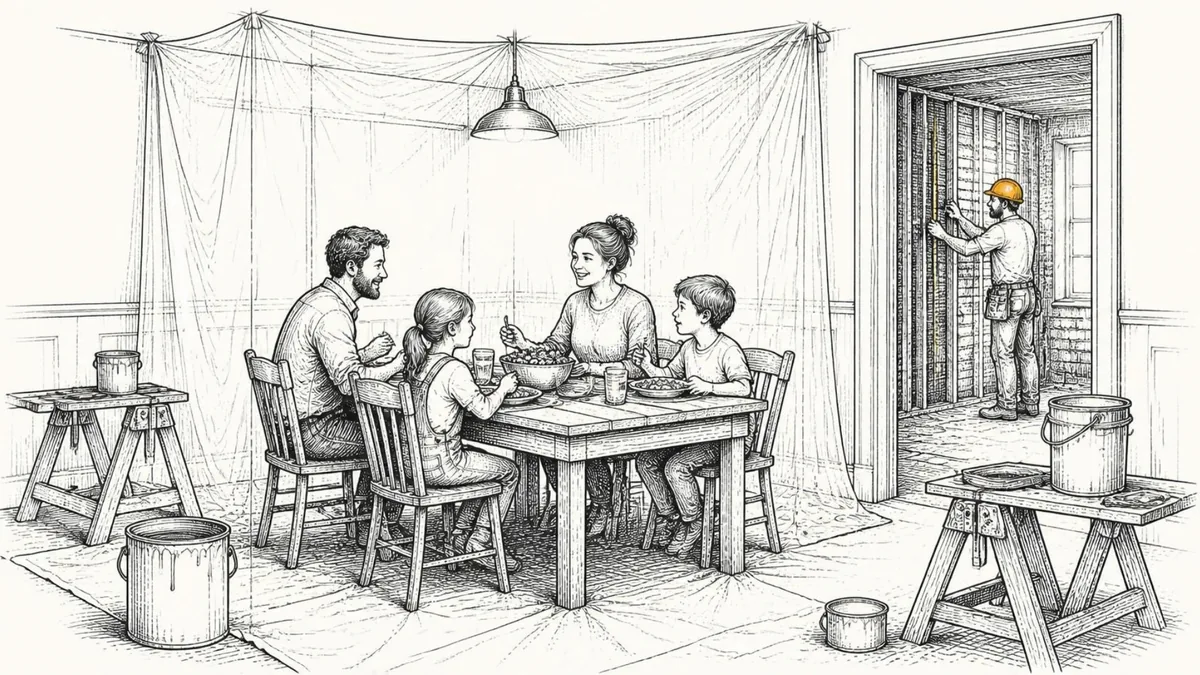
So you stage it. The kitchen goes first, with a microwave and a hot plate set up in the dining room while it's out. Then the bathroom, once the kitchen works again. There's always somewhere to sleep, somewhere to wash and some way to eat. The house is a mess for a year, but it's a livable mess.
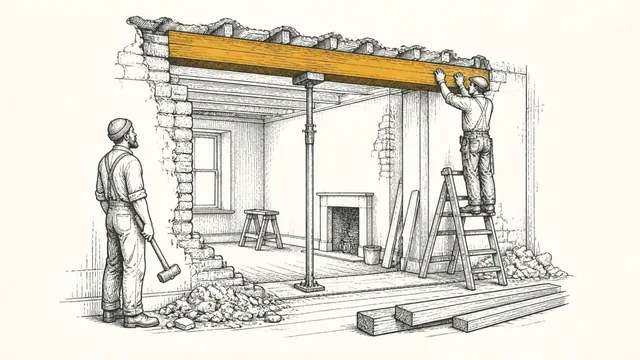
Big companies tend to run transformations the other way. A new operating model, a new platform, a new planning process and a reorganization, all announced at one town hall and all started in the same quarter. Every room is torn up at once. The business still has to ship, sell and support customers the whole time, so the work slows, the old way and the new way run side by side, and the program everyone called a one-year effort is still running long after anyone remembers the town hall.
You can't skip the renovation
None of this is an argument for leaving the house alone. If you think you can do what you did in 2020 and survive in 2030, you'll fall off as an organization. When companies first went digital, a lot of them fell into the obvious trap: take the paper product and put it on a website. Plenty will fall into the same trap with AI.
So the house has to change. The question is how you live in it while it does.
Why everything at once stalls
The big-bang plan looks efficient on paper. It fails for reasons you can see from the driveway.
Nothing is usable for months. When every room is half done, there's no finished room to prove the new way works. People living in the mess start to wonder whether the old house was really so bad, and support for the program drains away long before the end.
The old house keeps running anyway. Customers don't pause. Teams keep the old process alive "for now" while they build the new one, and suddenly they're running two. In a stalled transformation, "for now" turns into the permanent arrangement.
Nobody can tell what's done. With every room in progress, status reports turn into percentages, and sixty percent done across every room in the house means no room anyone can use.
Stage it by room
The fix is old and boring. Pick one room, finish it, move people in, then start the next.
In a company, a room is a piece of the business whole enough to work end to end on the new way: one product, one customer group, one region. "Phase one of the platform" rolled out to everyone at once just knocks a hole in every wall.
Start with a room where the people want the change (or at least aren't fighting it), where a finished room will convince the next one, and where nothing depends on another room being done first.
Then finish it properly. The old process switched off, the old tool retired, the team working the new way without the transformation team holding its hand. It's tempting to call a room done at eighty percent and move the crew on. Don't. The last stretch is where the old house survives.
Move people in one room at a time
At Wiser we were merging a portfolio built from acquisitions. Four of the products did versions of the same job, minimum advertised price intelligence: is your product being sold at the price it's supposed to be? We decided to build one MAP product.
We didn't build it off to the side and then flip a switch. We built the new product's features in an order that let us bring the old products in as we went. The first set of features served everyone using product A, and product A's customers moved over. The next set served everyone on product B, and they moved. The roadmap itself did the consolidating, instead of us just cutting products off. Some products were cut, but their customers got the chance to move first. That's how we kept them from feeling the merge.
Underneath, the operations were merging too, and customers never had to see that. We still had to be deliberate about what it did to each product, so every one of them kept serving people the way they'd signed up, paid and contracted for. That was our hot plate in the dining room. "One platform out of five acquisitions" has the rest of that story.
At PenFed it was a single room. When we brought the mobile app in-house, members needed a new app. We didn't announce that the old one was going to turn off. We built the new app, had our agency partner handle the first switchover, and ran both apps in parallel while we encouraged members to move over a three-month ramp. There was an easy on-ramp, and the old room stayed open until people had moved. ("Outsourcing is a loan" tells how that app came in-house.)
Keep the house livable
Before any wall comes down, write the short list of things that must keep working through the whole renovation. Payroll runs. Customers can buy. Support answers the phone. Releases go out. Every customer keeps getting what they paid for.
That list tells every crew what they aren't allowed to break, and it tells you which temporary workarounds to build before the work starts, instead of after something fails on a Tuesday.
People can put up with plastic sheeting for a long time if dinner still happens. Not knowing whether the shower will work tomorrow is what wears them out.
A room is done when people live in it without thinking about the renovation. The new way is the only way, and nobody is quietly keeping the old one as a backup. The team that works there can change it without calling the transformation team. And the people in the next room have been in and looked around, which builds more momentum than any deck about the future state, because they can stand in it.
Where the metaphor breaks
Sometimes the foundation is the problem. If the core system everything sits on is failing, room-by-room work won't save the house, and you may have to move out for a while: freeze new features, run a hard migration, accept a rough quarter. That can be the right call. Say so early and plainly, to everyone who lives there. A surprise move-out costs far more trust than a planned one.
Rooms in a company also aren't as separate as rooms in a house. Change how sales works and you've changed what finance sees and what support hears. Staging by room shrinks the mess. It won't keep it inside one room. Plan the doorways.
And a house renovation ends. A company's doesn't, because the market keeps moving the walls. 2030 will ask for different rooms than 2020 did. The goal is a company that's always finishing rooms, rather than one that's permanently mid-demolition.
Try this
- List every change program running right now, including the small ones nobody calls a transformation.
- Count how many rooms are torn up at once. Be honest about the ones that are "paused."
- For each, write what finished looks like in one sentence. If you can't, it isn't a room yet.
- For the next one you start, put the work in the order that lets one group of customers or users move over completely before the next group starts.
- Write the livable list: the handful of things that must keep working no matter what.
Where do you land?