I once worked inside a company that set an aggressive revenue target and made the push. Real effort, real growth. It barely moved the cash flow.
Nobody saw that as a problem until it was time to spend. The company had plans for what came next, and the plans needed money in the bank. The money wasn't in the bank.
Your balance sheets matter, but so does your bank account.
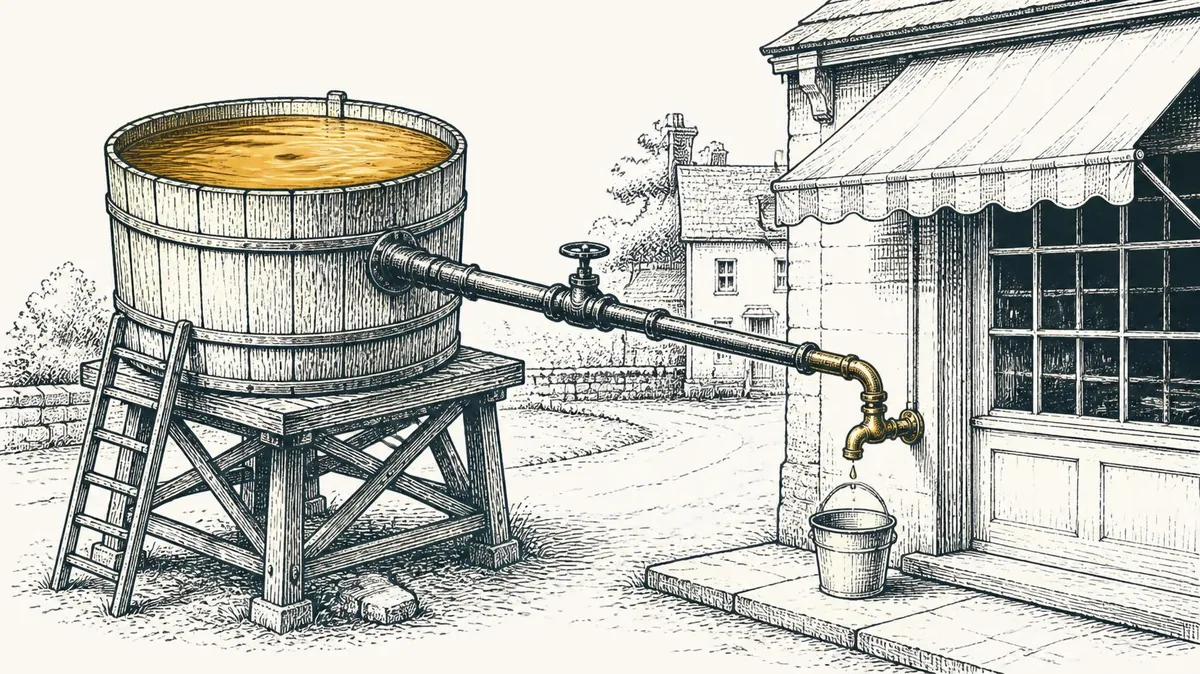
Picture a water tower on the hill above a shop. The tower is full. The pipe down to the shop is nearly closed, and what reaches the tap is a drip into a bucket by the door. The owner can point at the tower all day. The bucket is what pays the staff.
The tower and the tap
Profit is how much water is in the tower. Cash is what comes out of the tap this week.
On accrual books, your profit and loss statement counts a sale when you earn it: the day the work is done and the invoice goes out. Your bank counts it when the money lands. The time between those two moments is the pipe, and every business has one. A coffee shop's is short. The customer taps a card and the money settles in a day or two. A firm that invoices large customers on net 60 has a pipe two months long, and longer when the customer's payables team takes its time.
Money going out runs through pipes too, and they tend to be shorter. Payroll doesn't wait for receivables. Rent is due on the first. So a business can be solidly profitable on paper and short on cash for weeks at a stretch.
Why profitable businesses run dry
The causes are boring, which is exactly why they catch people.
Customer terms. Net 30 sounds like a month. In practice it's 30 days from whenever the invoice gets approved, plus however long it sat in someone's inbox first.
Payroll. Every two weeks, in full. It's the one outflow you can't renegotiate with the people it goes to, and you shouldn't try.
Lumpy bills. Annual software contracts, insurance renewals, quarterly taxes. Each one is reasonable. Three in the same month can drain an account that was fine the month before.
Growth. Every new customer is work you pay for now and get paid for later. The faster you grow, the more water has to sit in the pipe just to keep the tap running. That's how a business runs out of cash in its best year.
Decisions made on the balance sheet
Back to that company. The revenue push wasn't the only thing that looked better on paper than in the bank. Strategic decisions got made on the balance sheet: bets that sounded good on paper but didn't bring much cash with them. Each came with promised efficiencies once it was folded in. Getting those efficiencies took investment. Investment took cash, and there wasn't enough of it.
So the company went to raise money and found the market had changed. Money that had been easy to find wasn't easy anymore.
If there's one thing I'd want an owner to take from that, it's this: the money that's available today is not always money that's going to be available tomorrow. A plan that depends on raising later, borrowing later or getting paid later is a plan that depends on somebody else's timing.
They've since reorganized. It was far more painful than it needed to be.
Small businesses make the same mistake at a smaller size. The big contract on net 90 that looks wonderful on the P&L. The second location that will pay for itself once it's open, if you can fund the months before it does.
Widen the pipe or move the timing
Every fix does one of two things. It brings cash in sooner, or it changes when cash goes out.
Get paid earlier. Ask for a deposit before work starts, and bill project work by milestone so you're never funding more than one stage at a time. Shorten terms for new customers; net 15 is a normal ask from a small vendor. Put a card or bank debit on file for recurring work, so payment happens on a date you set. Each of these shortens the pipe without touching your price.
Pay on purpose. Your own payables are the one pipe you fully control. Pay on the due date rather than the day the bill arrives, and spread big renewals so they don't stack up in one month. None of this means paying late. Paying late costs you suppliers and credit.
Open a line of credit while the tank is full. Banks lend most easily to businesses that look like they don't need the money, which is the same lesson that company learned the hard way about investors. Set it up in a good quarter, then plan never to draw on it.
Ask what a decision does to cash before you make it. The P&L will tell you whether it's a good bet eventually. Cash tells you whether you can survive the wait: when does it bring money in, and what does it cost before then?
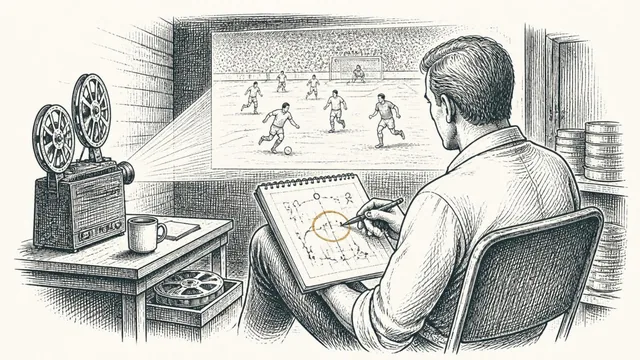
Keep a 13-week cash view. Thirteen weeks is one quarter: long enough to see the lumpy bills coming, short enough to estimate honestly week by week. The exercise below builds one.
Before you change your terms or take on a credit line, run it past your accountant or banker. They can see your books. This essay can't.
Where the metaphor breaks
Water doesn't negotiate. Customers and vendors do. The pipe in this picture looks fixed, and that's the most misleading part of the image. Payment terms are a conversation. Plenty of owners accept whatever terms the customer's paperwork says and never ask for a deposit, because asking feels awkward. Ask anyway.
A water tower also stays full until you drain it. Outside money doesn't. The tower you were counting on, an investor, a lender, the big customer who always pays, can shrink while you're not looking, through no fault of yours.
And a pipe can be too wide. A customer who pays twelve months up front has handed you water you owe back as a year of service. Spend it like this month's profit and you've borrowed from next year without noticing.
Try this
Build a 13-week cash view. A spreadsheet is plenty.
- Make 14 columns: a starting column, then one for each of the next 13 weeks. In the starting column, put today's actual bank balance.
- List every expected inflow in the week you realistically expect it to land. Use how late each customer actually paid last time. The terms on the invoice are a wish.
- List every outflow in the week it leaves: payroll, rent, loan and card payments, taxes, renewals, inventory, and the annual bills you'd rather forget.
- Add a running balance, so each week starts where the last one ended.
- Circle the lowest week. Fix it now, by pulling an inflow earlier or pushing an outflow later.
- Before any big commitment, add it to the sheet and see what it does to the lowest week.
- Update it every Monday. Drop the week that just ended and add one at the far end.
Where do you land?